

A massive geopolitical conflict is unfolding before our eyes: while the US sinks into war spending and crises, China maps out a long-term plan that threatens to radically alter the global balance of power. From artificial intelligence to rare earths, the battle for world control has already begun – and it looks like nothing that has come before.
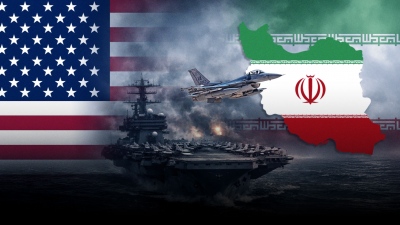
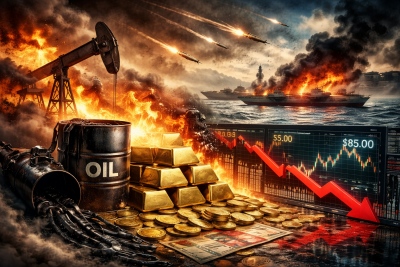
As the war in Iran enters its 20th day, the United States is being forced to spend enormous sums on dead-end military operations, and global attention is monopolized by oil prices and immediate developments on the battlefield. However, behind this noisy backdrop, a much deeper and more decisive process is unfolding almost silently. China is moving forward with the formation of a strategic framework that concerns not just its economy, but the very structure of global power for the coming decades.
On March 5, the 15th Five-Year Plan was presented to the National People's Congress, an extensive and highly detailed document that goes beyond the limits of simple economic guidance. It is a comprehensive blueprint reflecting Beijing's ambition to control the core technological, industrial, and strategic infrastructures of the future. The fact that artificial intelligence is mentioned dozens of times within the text is no coincidence. On the contrary, it clearly shows that China does not view it as just another growth sector, but as the nucleus upon which its entire economy will be built.
Ambitious plan
The pursuit is clear and extremely ambitious. Within a few years, the vast majority of the Chinese economy will incorporate AI applications, turning it into a basic infrastructure, comparable to electricity or communication networks! This means that every sector, from industry to services and defense, will depend entirely on digital and automated systems. At the same time, particular emphasis is placed on robotics, and specifically the development of humanoid robots, which are considered critical for the transition to a new industrial era.
China is not limiting itself to these areas, however. The plan includes ambitious initiatives in sectors such as quantum communications, nuclear fusion, and brain-computer interfaces, showing that the goal is not merely to follow developments, but to shape them. The economic dimension of this strategy is equally impressive. Industries related to artificial intelligence are expected to gain immense value, making China one of the dominant players in the global economy. Simultaneously, the emphasis on self-sufficiency in critical resources, such as rare earths and semiconductors, reveals that economy and military power are now treated as inseparable concepts.
The US lags behind
At this point, the contrast with the United States becomes apparent. The primary American response to China's technological challenge has been the CHIPS Act, a significant program that boosts semiconductor production. However, as important as it may be, it remains limited to a specific sector. In contrast, the Chinese strategy covers the entirety of the technological and industrial ecosystem, creating an imbalance that is becoming increasingly visible.
Rare earths
The issue of rare earths is perhaps the most characteristic example of this new form of power. China almost completely controls the processing of these critical materials, which are essential for manufacturing advanced weapons systems. This means that the military capability of other countries depends directly on access to resources that are under Chinese control! The imposition of export restrictions on these materials turns economic dependence into a powerful geopolitical tool.
The war has changed
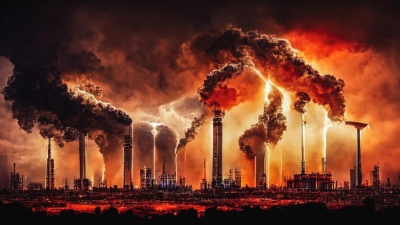
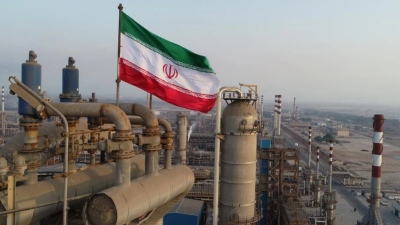
At the same time, the conflict in the Middle East is taking on increasingly dangerous characteristics. Attacks are no longer limited to military targets but extend to critical infrastructure, such as refineries and desalination plants. This development creates a new kind of war, where targets are directly linked to the survival of societies and the functioning of economies. The destruction of such facilities can have enormous consequences, not only on an energy level but also on an environmental and humanitarian one.
In regions where access to water depends almost exclusively on desalination, the loss of this infrastructure could lead to mass population movements and deep social crises. Within this context, it is becoming increasingly clear that the global order that dominated recent decades is under challenge. The concept of an international rules-based system seems to be receding in the face of the reality of power determined by the control of resources, technology, and infrastructure.
Different perceptions
The contrast between the leaderships of the great powers captures this transition in the most characteristic way. On one hand, American strategy emphasizes immediate power and military operations. On the other, the Chinese approach is based on long-term planning and the control of the key elements that define power over time. This difference is not merely tactical. It reflects two entirely different perceptions of what sovereignty means in the modern world. One focuses on the immediate imposition of force, while the other on shaping the conditions that make that force sustainable or not. Thus, while conflicts continue and tensions rise, the real stake may not lie only on the battlefields, but in the silent competition for the control of the future.
www.bankingnews.gr






Σχόλια αναγνωστών